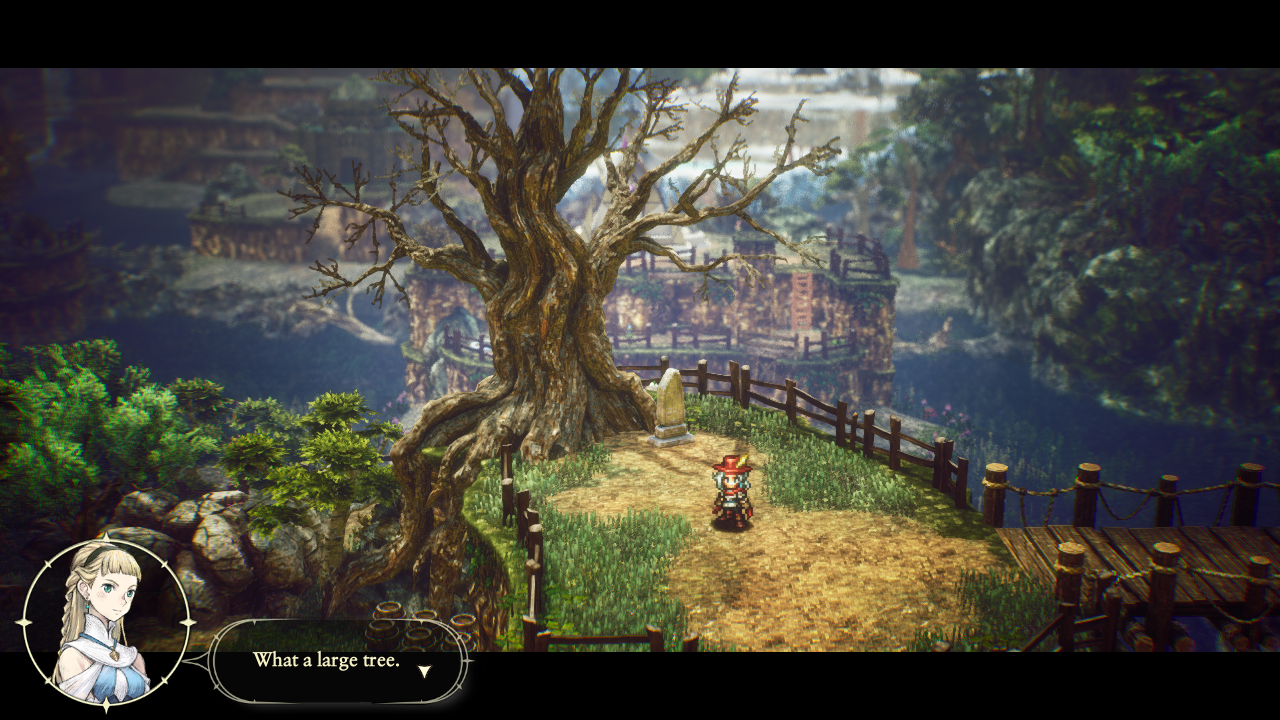
Hey Video Games, shut the fuck up. I’m tired of your talking and constant chatter. I don’t think it’s ever been cute or interesting. I don’t think it has ever made a game better. So, just shut the fuck up, please?
Let me step back. I recently started The Adventures of Elliott: The Millennium Tales. I was in the mood for a silly anime-inspired RPG, and this seemed to fit the bill. Lo and behold, barely an hour in, and Elliott has found himself with a chirpy character in his ear asking him questions and making comments as he starts his journey. Now, I am only an hour into the game. I haven’t even finished the first dungeon. For all I know, this secondary character is temporary, and the bulk of the game will be silent.
But, I know that’s wishful thinking. The chatty princess Faie will continue to chime in periodically to ask me stupid questions and ruin puzzles. I cannot escape this.
(Ed. Note: Before publishing this, Square Enix did release a patch that allows you to turn off Faie’s chatter. But, I wrote this like a month before publishing it, and the fact that the base game didn’t include this option proves my points still stand, so I am going to keep the rest of this piece as written.)
When did video games become scared of leaving its players alone with their thoughts? If it’s not an overly-talkative companion, it’s sarcastic quips from your character. “Did I just do that?” your character will say, right after they shoot a fireball out of their hands. Yes, you just did that. I pushed a button that made you do that. Jesus wept, just shut the fuck up.
Now, this is nothing new in video games, really. In 1998, Nintendo released the Legend of Zelda: Ocarina of Time, and the “Hey Listen!” of the fairy Navi became an instant meme in a time before memes were a mainstream thing. This idea of a chatty companion would continue into later Zelda games as well, whether it be a talking boat, a talking sword, or a talking… whatever Midna is.
And this extends beyond video games. According to a study of 60,000 movies done by Stephen Follows, dialogue has increased to 50% of a movie’s screentime, a level Fellows claims is less than movies in the 1940s, but still the highest ratio movies have seen since the 1950s. Go watch a movie like The Conversation from 1973 (the movie that inspired Follows to start his study), and you will find long stretches of Gene Hackman sitting at audio equipment and starting and stopping a tape while he adjusts knobs and sliders. And it fucking works. There is an unbroken tension there for minutes, filled with clicks, hisses, and squeals. That tension slowly builds with every moment, and it makes the dialogue that IS in the movie stand out. It works because just focusing on the ambient sound creates an atmosphere that carries over into the rest of the movie.
And it’s not like it makes the media better. When God of War: Ragnarok was released in 2023, the major criticism that most people had was that Atreus would not shut the fuck up. He would constantly comment on new areas as the player entered them. What is worse than that, though, is he would point out the solution to a puzzle almost immediately, as if the designers didn’t feel like most players could figure it out without a little help. I’m not sure if that’s an bigger indictment of the developers, the testers, or the audience, but some ball was dropped somewhere.
We can’t have quiet in modern media. For some reason, movies, tv shows, and video games can not trust the audience to pay attention every second of every minute of every hour of every thing. The piece of media needs to re-grab the attention of its consumer, and right now, their method to do so is to drop some dialogue or auditory interaction of some sort into the game. And, honestly, I guess I kind of get it. I know that my attention span has shrunk considerably over the past twenty years. When I play video games on my laptop or Steam Deck, I usually have a TV show or Twitch stream on in the background. When I watch a TV show or movie, I’m usually scrolling my phone. There are studies that show the same thing happening across the board. We live in a world where our attention is constantly being pulled in multiple directions, and we’ve given into that whole-heartedly. And maybe that’s the problem.
Maybe it’s not that the creators don’t trust the audience to pay attention, but rather, maybe it’s the audience’s fault, because they’re so easily distracted. Maybe, we were the baddies all along.
If that’s the case, then I think it’s only fair that we both work toward a solution. So, I change my thesis of this post. Instead of me giving a command to video game developers, maybe I can offer a proposition. Perhaps, we can find a middle ground, game developers. I will agree to put my phone into a protective sleeve, which will prevent me from looking at it, and pay more attention to your creation if you agree to at least put a setting in to cut out the chatter. Maybe if we both shut the fuck up, we can all be happy.
